In the modern hyper-scale digital ecosystem, the Domain Name System (DNS) is often referred to as the internet’s telephone directory. It is the absolute foundation of web communications, translating human-readable hostnames into machine-readable IP addresses. Every web request, database query, application API ping, and corporate email exchange relies on rapid, authoritative DNS resolution.
Yet, despite its central importance to the global economy, DNS was originally designed in an era when security was not a primary consideration. This legacy design makes DNS one of the most highly targeted, exploited, and vulnerable components of enterprise infrastructure.
Today, traditional reactive security mechanisms, such as static IP blocklists, manual firewall signatures, and basic rate limiting, are no longer sufficient. Attackers are utilizing automated scripts, polymorphic malware, and high-frequency domain generation algorithms (DGAs) to compromise DNS layers at speeds that render human mitigation impossible.
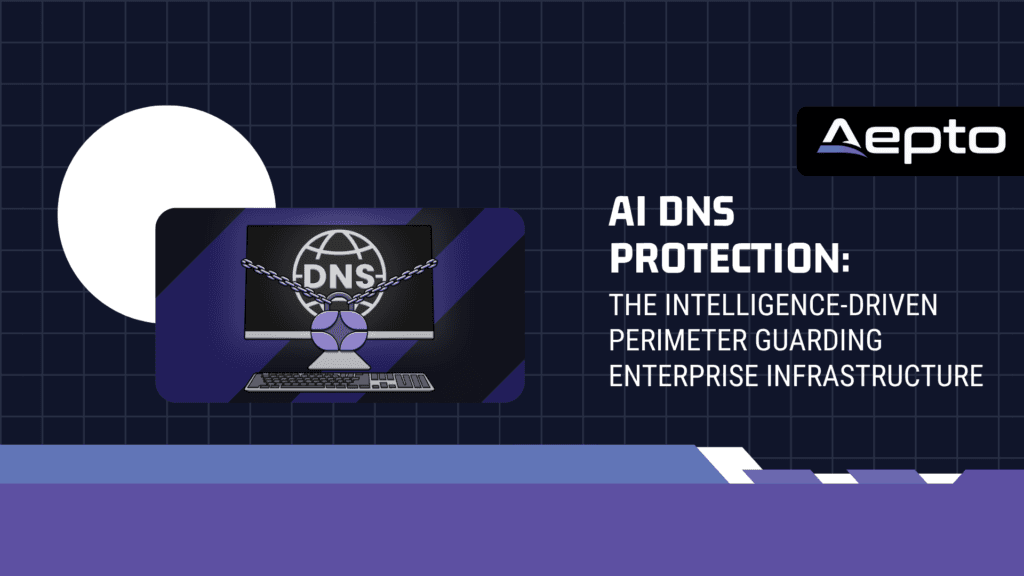
To secure your digital perimeter, organizations must transition from passive, signature-based defense models to active AI DNS Protection. By leveraging machine learning (ML), neural networks, and predictive anomaly heuristics, modern AI protection engines analyze DNS traffic in real-time, neutralizing threats at the edge before they can disrupt your web applications or compromise sensitive corporate data.
Key Takeaways
Before analyzing the underlying technical neural networks, here is an executive summary of AI-powered DNS defense:
- Smarter Real-Time Threat Interception: Unlike static firewalls, AI DNS protection continuously analyzes resolution behaviors, dynamically blocking emerging exploits, phishing lookalikes, and malware nodes.
- Neutralize Advanced Exfiltration: Machine learning algorithms pinpoint stealthy DNS tunneling and data exfiltration patterns by parsing minute changes in query lengths and sub-domain distributions.
- Stop Polymorphic Malware: AI heuristically identifies Domain Generation Algorithms (DGAs) used by modern ransomware to establish dynamic Command and Control (C&C) channels.
- Zero-Day Predictive Audits: By utilizing behavior-based models, AI blocks malicious domains upon registration based on structural patterns, long before they appear on public threat databases.
- Synchronized Enterprise Defense: Merging real-time DNS intelligence with enterprise-grade web hosting creates an ironclad, defense-in-depth security perimeter.
1. The Vulnerability of Legacy DNS: Understanding the Modern Threat Landscape
Legacy DNS security relies on a simple assumption: if a domain name is known to be malicious, it is added to a database, and future requests to that domain are blocked. While this signature-based model works for static, long-term threat sites, it is completely useless against the high-frequency techniques used by modern cybercriminals:
High-Frequency Domain Generation Algorithms (DGA)
Modern malware families (such as advanced ransomware and Trojan droppers) utilize Domain Generation Algorithms (DGAs) to maintain communication with their Command and Control (C&C) servers. A DGA script on an infected device generates hundreds of unpredictable domain names daily (e.g., xq92plz71m.org, v712mwpq90.net).
The attacker only needs to register one of these hundreds of variations to establish a communication channel. Because these domains are generated dynamically and exist for only a few hours, traditional static blocklists are completely blind to them.
DNS Tunneling and Data Exfiltration
Because DNS traffic is required for networks to function, standard corporate firewalls generally leave Port 53 (the default DNS port) wide open. Attackers exploit this open gateway using a technique called DNS tunneling.
By encoding sensitive data (such as database credentials or credit card files) into sub-domain prefixes of a domain they control (e.g., encoded-data-string.attackerdomain.com), malicious actors can exfiltrate data directly through Port 53. Since the request is formatted as a standard DNS query, traditional firewalls route it out of the network without flagging any security warnings.
This unmonitored channel represents a severe vulnerability, which is explained in our guide on why centralized domain management matters more than ever.
2. How AI DNS Protection Intercepts Cyber Threats
AI DNS protection does not rely on post-event analysis; it parses data streams in real-time as queries are received by the authoritative or recursive resolver.
THE REAL-TIME AI INTERCEPTION PIPELINE:
[ Raw DNS Query Received ] ➔ [ Semantic & Entropy Parsing ] ➔ [ Machine Learning Classification ] ➔ [ Instant DNS Dropping / Redirection ]
You can explore how these automated methodologies operate in our guide to ai-powered smart domain insights.
Semantic and Structural Analysis
Malicious domains often have structural differences compared to legitimate, human-designed domains. AI models are trained to evaluate several structural indicators:
- High Entropy: Legitimate domains like
google.comoraepto.comdisplay low character entropy because they are based on pronounceable words. Malicious DGA domains display highly random character distributions, which AI can detect instantly. - Length and Subdomain Spurt: Sudden, massive arrays of deeply nested, high-character subdomains are a primary indicator of data exfiltration attempts.
Temporal and Behavioral Clustering
AI-powered platforms monitor the timing of incoming DNS requests. When malware compromises a local network, hundreds of infected machines (bots) often begin querying their command servers in synchronized, rhythmic intervals. Human analysts cannot spot these microsecond timing patterns, but machine learning clustering algorithms can instantly isolate these synchronized sweeps, identifying botnets and mitigating active distributed attacks.
Proactive Smart Domain Intelligence
Rather than waiting for malware to execute, AI engines scan global Top-Level Domain (TLD) registry zones the moment new domains are registered. By analyzing the registrar used, the geographic location of the host, the presence of specific keywords, and visual content scrapes of the landing pages, the AI can flag a brand-new domain as a “malicious lookalike” within seconds of its creation.
Ready to scale your Domain Monitoring??
Explore how our AI Domain Monitoring System can save you hours of manual work every week.
3. Organizing and Securing Your Domain Infrastructure
Deploying cutting-edge AI security is only one part of the equation. To protect your brand’s digital legacy, your enterprise domain management must be structured, clean, and organized. If your security alerts are scattered across disjointed departments and multiple administrative accounts, critical system warnings will inevitably be lost in the noise.
To prevent administrative drift and streamline your monitoring loops, organizations utilize specialized platforms like Aepto.
A. Unified Multi-Registrar Visibility
Many companies suffer from “domain sprawl,” where their digital real estate is scattered across different retail registrars. By utilizing a unified, centralized monitoring dashboard, you can gather visibility over your entire portfolio without executing complex, risky domain transfers. Discovering what you own is the baseline of security, and it is a core concept behind the art to simplify domain management.
B. Logical Folder Segmentation
Not every domain in your inventory requires the same security posture. Your high-priority corporate email portals require real-time AI security audits, whereas an inactive, defensive trademark registration can run with standard daily scans. To prevent alert fatigue and target your security resources effectively, you must segment your portfolio into logical groups using advanced domain folder management rules.
C. Active Domain Watchdogs
For domains that are registered by third parties but hold significant strategic value to your company, passive tracking is not enough. By configuring an active domain watch perimeter, you can turn on 24/7 external surveillance. The moment a competitor’s domain name enters its deletion cycle, shifts its nameserver routing, or becomes available for open registration, the monitoring engine triggers an instant notification.
D. Smart Renewal Systems
The most common cause of domain loss is not a high-tech hack, but simple human error, such as an expired corporate credit card or a missed email notification. Implementing smart domain renewal alerts ensures that your mission-critical domains are protected by automated, multi-channel warnings that escalate to shared corporate channels (such as Slack or Discord) before an asset slips into its redemption cycle.
4. Integrating AI Security with High-Performance Hosting
While setting up real-time AI DNS protection, nameserver monitoring, and domain-level threat intelligence is vital, your security framework is only as strong as its weakest link. A secure domain pointing to a slow, unpatched, or poorly optimized web host remains a major target for cybercriminals.
If an attacker cannot breach your secure DNS layers, they will attempt to exploit vulnerabilities on the physical servers hosting your web application files and databases. Conversely, pointing your secure, AI-monitored DNS records to a high-performance web hosting provider like Limitless Hosting provides the ultimate defense-in-depth security model.
When your applications are stored on SSD-powered, hardened server architectures with active firewalls, you eliminate host-side vulnerabilities.
This synchronization ensures complete technical alignment. If your hosting environment encounters a routing anomaly, or if an external actor attempts a cache-poisoning attack against your domain, your systems can instantly verify that your live hosting IPs match your authoritative DNS configurations, preserving absolute uptime and data integrity for your global audience.
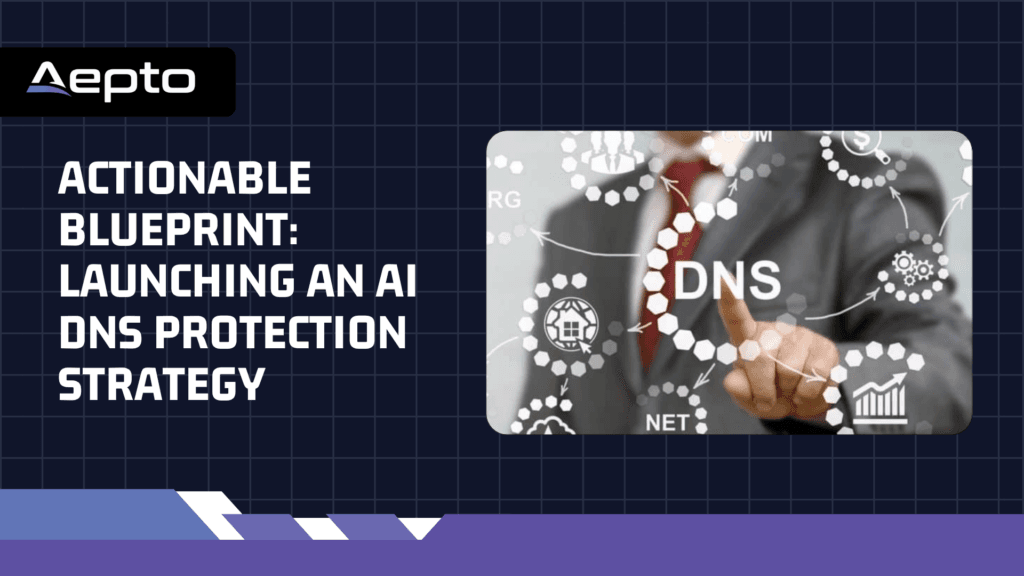
5. Actionable Blueprint: Launching an AI DNS Protection Strategy
To successfully implement an intelligence-driven DNS and domain security protocol across your organization, execute this simple three-step deployment blueprint:
Step 1: Execute a Complete Security Audit
Consolidate every domain, active API route, and regional subdomain registered by your company into your centralized Aepto dashboard. Having a single source of truth is the absolute baseline of defensive risk management.
Step 2: Establish Machine-Learning Threat Feeds
Route your DNS queries through recursive resolvers that incorporate active AI threat analysis. This ensures that every out-of-network query generated by your local servers is checked for DGA, tunneling, and malware associations before resolution completes.
Step 3: Configure Instant Communication Webhooks
Do not rely on passive email digests to monitor critical security events. Configure your Aepto alert settings to route high-priority warnings, such as nameserver drifts, unauthorized DNS updates, or status changes, directly to your active corporate developer channels via Slack, Microsoft Teams, or Discord webhooks.
DNS Protection: AI-Driven vs. Legacy Signature Models
| Security Metric | Traditional Signature Methods | AI-Powered DNS Protection (Aepto) |
|---|---|---|
| Data Parsing Model | Static database lookups (IP/Domain blocklists) | Dynamic behavior, semantics, and entropy parsing |
| DGA Malware Defense | Ineffective (newly generated domains are missed) | Highly effective (detects randomized character patterns) |
| Exfiltration Protection | Blind to sub-domain anomalies | Proactive (flags length and query frequency surges) |
| Zero-Day Detection | Reactive (only works after a threat is cataloged) | Proactive (predicts and blocks malicious domains at birth) |
| Alert Delivery | Periodic email digests, highly delayed | Real-time multi-channel Slack, Discord, and SMS alerts |
| Operational Control | Disjointed spreadsheets, high drift risk | Centralized, folder-based corporate governance |
Conclusion: Securing Your Digital Future
In the modern digital landscape, legacy approaches to network and domain security are rapidly becoming obsolete. Relying on static IP blocklists, manual firewall configurations, or passive domain tracking to protect your digital real estate exposes your organization to severe security breaches, data exfiltration, and brand hijacking.
By embracing automated AI DNS protection, centralizing your domain visibility, segmenting your assets into structured folders, and hosting your applications on high-performance, secure servers, you build an impenetrable barrier around your digital real estate. Take control of your virtual perimeter, automate your technical lifecycles, and protect your digital assets with total clarity.
Are you ready to claim absolute control over your digital footprint? Open your Aepto Dashboard today to audit your domain health, activate real-time watching, and secure your digital assets for the future.
Frequently Asked Questions (FAQs)
1. How does AI DNS protection differ from standard firewall rules?
Standard firewall rules operate on static, pre-defined parameters, such as blocking specific port numbers or known IP addresses. AI DNS protection, conversely, utilizes machine learning algorithms to analyze the behavior and structure of DNS queries in real-time, allowing it to identify and block emerging zero-day threats, polymorphic malware, and data exfiltration patterns that use standard Port 53.
2. What is a Domain Generation Algorithm (DGA), and how does AI stop it?
A DGA is a script used by ransomware and malware families to generate hundreds of random domains daily to communicate with command servers. Because these domains are created dynamically, static blocklists cannot track them. AI stops DGAs by using semantic analysis to detect randomized character structures and anomalous query frequencies, blocking the communication channel instantly.
3. Can I use Aepto to monitor my domains if they are registered across multiple registrars?
Yes. Aepto is fully compatible with all domain registrars. Because our systems pull data directly from root-zone registry servers using secure, authoritative protocols, you do not need to transfer your domains to our platform to secure them. You can monitor, group, and track all your assets from a single dashboard.
4. What is DNS tunneling, and why is it a severe risk for businesses?
DNS tunneling is a technique where hackers encode sensitive corporate data (such as passwords or files) into the sub-domain headers of DNS queries. Because standard firewalls leave the DNS port (Port 53) open to allow basic web resolving, these queries exit the network undetected, allowing cybercriminals to bypass standard security filters.
5. Why should my secure domains point to a premium, high-performance host?
Your domain name acts as the digital guide to your web servers. If your destination host is slow, unpatched, or poorly configured, attackers can exploit server-side vulnerabilities to compromise your dynamic applications. Storing your files with an enterprise host like Limitless Hosting ensures your data is fast, reliable, and secure at both the DNS and hosting layers.
6. How does real-time alerting prevent domain hijacking?
Attackers who compromise a registrar account will often quietly modify the authoritative nameservers to redirect legitimate web traffic to phishing sites. Real-time alerting systems continuously monitor your root DNS configurations. The instant any unauthorized nameserver drift or status change is detected, an alert is pushed to your team, allowing you to block the breach immediately.
Read more:
- Is Domain Protection Worth It? The Definitive Guide to Safeguarding Your Digital Identity
- Corporate Domain Name Management and Renewals: The Enterprise Strategy Guide
- Multi-Domain Oversight: The Operator’s Playbook
- Free vs Paid Domain Monitoring: What Are the Differences?
- What Causes Website Downtime and How Can You Detect It Faster?