In the modern digital economy, the concept of a retail storefront has been fundamentally redefined. While physical corporate offices, warehouses, and brick-and-mortar locations still exist, a company’s primary, high-stakes, and most active interaction with the global marketplace occurs entirely online. At the absolute center of this digital presence sits your business domain name.
A business domain name is far more than a simple sequence of characters typed into a web browser address bar. It is the virtual foundation of your corporate identity, the primary gateway for customer acquisition, the host of your secure software applications, and a highly valuable piece of intellectual property. Every email sent by your employees, every transaction processed on your e-commerce platform, and every piece of search engine equity you build is anchored directly to your domain.
Yet, despite its monumental importance, many entrepreneurs and corporate teams treat domain selection and management as passive, minor IT chores. This structural negligence leads to weak branding, poor search engine visibility, vulnerability to cybercriminals, and the costly administrative challenge known as “domain sprawl.”
This comprehensive guide explores what a business domain name is, why its technical architecture is crucial for corporate branding, the common pitfalls to avoid during selection, and how modern organizations can leverage cutting-edge AI-driven discovery tools to claim, organize, and protect the perfect digital address.
Key Takeaways
Before exploring the technical layers of corporate digital real estate, here is an executive summary of business domain strategy:
- More Than an Address: A business domain name is a critical intellectual property asset that dictates your search engine positioning, brand credibility, and email security.
- Avoid Silent Brand Damage: Choosing a domain that is too complex, hard to spell, or legally conflicted is one of the most common ways businesses lose organic traffic and revenue.
- Consolidation Prevents Sprawl: Multi-brand corporations must centralize their domain portfolios to eliminate administrative drift and protect against security vulnerabilities.
- Leverage Cognitive Discovery: Modern artificial intelligence allows businesses to move beyond exact-match searches, using semantic brainstorming to discover high-value domain names.
- Secure the Route and the Host: Domain protection must align with high-performance, hardened web hosting to ensure your customers experience near-zero latency and absolute data security.
1. Defining the Business Domain Name
To understand the strategic value of a domain, we must first break down its technical and administrative structure. In the simplest terms, a domain name is a human-readable alias for an IP (Internet Protocol) address. Computers communicate using complex numerical strings (such as 192.0.2.1 or modern IPv6 sequences), but humans require memorable, linguistic identifiers to navigate the web. The Domain Name System (DNS) translates these human-friendly names into their corresponding numerical server destinations.
TECHNICAL DOMAIN ANATOMY:
[ Subdomain: secure. ] ➔ [ Second-Level Domain: yourbrand ] ➔ [ Top-Level Domain: .com ]
A business domain name is typically composed of three primary structural layers:
A. The Top-Level Domain (TLD)
Also known as the domain extension, the TLD is the suffix at the very end of your web address. TLDs are managed globally by the Internet Corporation for Assigned Names and Numbers (ICANN) and are categorized into:
- Generic TLDs (gTLDs): The classic, universally trusted extensions like
.com,.net, and.org. - New gTLDs: Modern, industry-specific extensions launched to combat name scarcity, such as
.tech,.app,.agency, and.solutions. - Country-Code TLDs (ccTLDs): Geographic extensions reserved for specific nations, such as
.uk(United Kingdom),.de(Germany), or.co(Colombia).
For commercial enterprises, the legacy .com extension remains the gold standard of digital credibility. It is the default extension that global users subconsciously type, and it carries an inherent level of authority that newer, unproven extensions often struggle to match.
B. The Second-Level Domain (SLD)
The Second-Level Domain is the unique core of your web address, the actual name of your brand or business (e.g., the yourbrand in yourbrand.com). This is the primary linguistic element where your company establishes its visual identity, trademark protection, and brand recall.
C. Subdomains
Subdomains are prefix additions to your second-level domain used to categorize distinct operational areas of your website (e.g., shop.yourbrand.com for e-commerce, blog.yourbrand.com for resources, or portal.yourbrand.com for client logins). Subdomains allow enterprise IT teams to route different services to separate server environments without purchasing additional domain names.
Ready to scale your Domain Monitoring?
Explore how our AI Domain Monitoring System can save you hours of manual work every week.
2. The Strategic Business Role of a Domain Name
For a modern corporation, a domain name is not just an administrative utility; it is a multi-dimensional business engine. Its configuration directly impacts several key areas of your enterprise:
A. Search Engine Optimization (SEO) and Organic Traffic
Search engine crawlers evaluate your domain name as a primary signal of topical relevance and structural authority. A clean, memorable, and keyword-rich domain name makes it easy for search algorithms to categorize your business.
Conversely, if your domain is cluttered, uses hyphens excessively, or resides on a spam-heavy, low-trust TLD, search engines may throttle your organic reach. Understanding how to align your domain choices with search strategies is critical for preventing the 7 common domain mistakes that cost businesses traffic and revenue.
B. Corporate Email Deliverability
Every promotional email, invoice notification, and critical business communication sent by your team carries your domain name in the sender address (e.g., ceo@yourbrand.com). If your domain has a poor historical reputation, is flagged for DNS inconsistencies, or lacks proper cryptographic authentication protocols (like SPF, DKIM, and DMARC), email providers like Google and Outlook will route your corporate messages straight to the spam folder.
C. Legal Trademark Protection and Cybersquatting Defense
In the digital space, competitive battles are fought at the registry level. If you do not secure the defensive variations, common typos, and regional ccTLDs associated with your core brand, opportunistic competitors or malicious “cybersquatters” can claim them. They can then use these lookalike names to divert your traffic, capture your leads, or host deceptive phishing campaigns.
To maintain a secure legal perimeter, scaling enterprises must understand why centralized domain management matters more than ever, as managing defensive brand assets across multiple departments and registrars without cohesive oversight invariably leads to expensive trademark breaches.
3. The Modern Challenge: Finding the Perfect Name in a Crowded Web
For startups and scaling brands, the greatest obstacle to securing a business domain name is scarcity. With over 350 million active domain names registered globally, almost every common dictionary word, short combination of letters, and direct brand match in the .com extension has already been claimed.
When confronted with this scarcity, many teams make the mistake of choosing a highly compromised name, such as adding unnatural hyphens (your-brand-online.com), using awkward abbreviations (yrbrnd.com), or settling for a low-trust extension. These compromises destroy brand recall, confuse customers, and limit your marketing efforts from day one.
To find a domain name that is memorable, brandable, and legally clear, modern enterprises can no longer rely on simple, manual registry search bars. Instead, they must leverage intelligent systems designed to find hidden opportunities in the global registry database.
4. Leveraging AI Discovery to Claim Your Digital Identity
To streamline this complex creative and technical process, Aepto has developed a revolutionary approach to domain ideation. Rather than forcing you to manually type variations into a blank search bar, our platform integrates advanced cognitive algorithms to automate the discovery pipeline.
By utilizing Aepto’s integrated ai domain discovery platform, you can enter your core business concepts, industry verticals, value propositions, or target keywords. The system’s semantic artificial intelligence analyzes your input to generate hundreds of highly relevant, creative, and completely available domain options.
THE COGNITIVE DISCOVERY PIPELINE:
[ Your Core Business Concept ] ➔ [ AI Semantic Brainstorming ] ➔ [ Real-time Availability & Trademark Check ] ➔ [ Curated Domain Portfolio ]
The Power of Semantic Association
Traditional search engines only check for the exact letters you type. Aepto’s AI engine understands the underlying intent and context of your business. If you input “eco-friendly packaging for logistics,” the AI doesn’t just suggest literal variations; it brainstorms semantic synonyms, Latin roots, and industry metaphors (such as “GreenRoute,” “BioPack,” or “EcoTrace”) that are physically available for registration.
Interactive Portfolio Curation
As you navigate the AI-generated recommendations, the platform allows you to:
- Categorize and Filter: Sort recommendations by extension type, character length, or brand style.
- Assess Market Viability: Instantly view key metrics, historic ownership records, and estimated values using AI-powered smart domain insights.
- Export and Share: Compile your favorite discoveries into professional PDF reports to share with your executive team, marketing agency, or legal counsel.
5. Beyond Discovery: Organizing Your Corporate Domain Portfolio
Finding and registering your primary domain is only the first phase of digital asset management. As your enterprise grows, you will inevitably acquire secondary domains, geographic ccTLDs, campaign microsites, and defensive variations. Without structured organization, this growing inventory can quickly decay into administrative chaos.
To prevent domain sprawl and maintain clean governance, organizations must implement structured division rules.
Implementing Folder-Based Segmentation
Do not dump your entire digital inventory into a single, chaotic list. By utilizing Aepto’s advanced domain folder management features, you can organize your assets into logical, secure folders based on project, brand, regional department, or priority level:
- Core Brand Assets: Your primary, high-priority domains that route your main traffic and emails. These folders require aggressive, real-time security alerts and multi-year registrations.
- Marketing and Campaigns: Temporary domains used for specific product launches, seasonal promotions, or regional advertisements.
- Defensive Blocks: Typos, alternative extensions, and common misspellings claimed purely to protect your brand from cybersquatting.
Segmenting your portfolio into these structured folders ensures that your IT, legal, and marketing teams can target security and financial resources precisely where they are needed most, eliminating administrative friction.
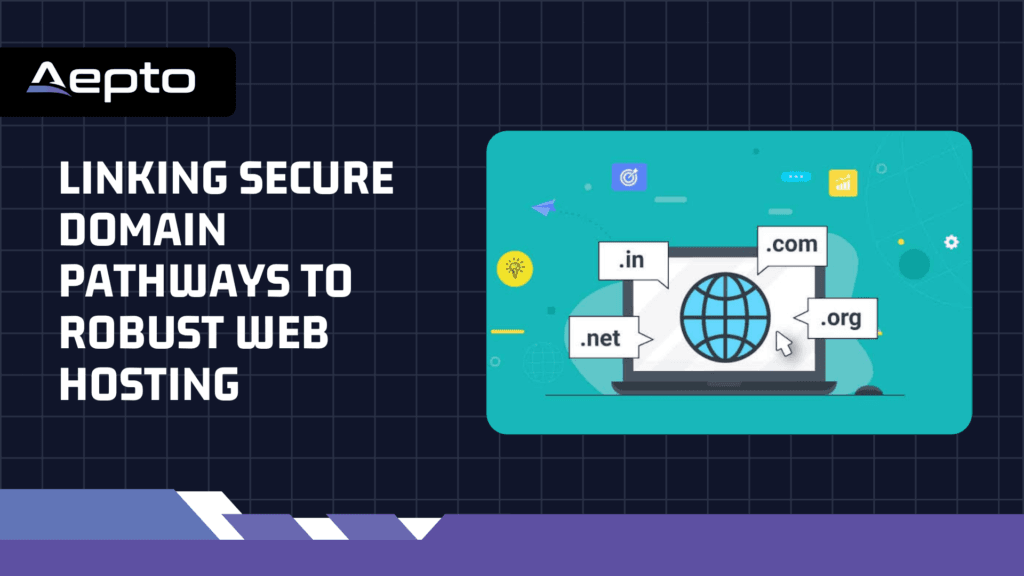
6. Linking Secure Domain Pathways to Robust Web Hosting
A business domain name cannot fulfill its commercial purpose in a vacuum; it must ultimately resolve to an active, secure, and high-performance web hosting server. While securing your domain’s registration and monitoring its DNS integrity is critical, you must also ensure that the physical servers storing your website data, databases, and customer transactions are fully resilient.
A highly secure domain name pointing to a slow, unmanaged, or vulnerable server remains an easy target for attackers looking to disrupt your business. Conversely, pointing your secure domain configurations to an enterprise-grade web hosting provider like Limitless Hosting provides the ultimate defense-in-depth model.
When your hosting infrastructure is fast, secure, and actively hardened against server-level exploits, your web applications can run smoothly without performance bottlenecks. This synergy ensures that any discrepancy, whether it is an external DNS spoofing attempt or a server-side resource spike, is detected and neutralized instantly, ensuring your global audience always finds an authentic, high-speed website.
By aligning your domain intelligence with highly optimized hosting environments, you eliminate technical gaps. If your hosting environment encounters a sudden localized node issue, or if your domain DNS is accidentally modified, you can verify that your live hosting IPs match your registered DNS records at all times, ensuring complete structural stability.
Business Domains: Manual Tracking vs. AI-Powered Discovery
| Business Metric | Traditional Manual Search | AI-Powered Discovery (Aepto) |
|---|---|---|
| Search Capabilities | Restricted to exact-match keyword entries | Semantic brainstorming, context analysis |
| Brainstorming Efficiency | Slow, requiring manual dictionary searches | Instant generation of hundreds of available options |
| Data Enrichment | Basic “Available/Not Available” status | Rich market metrics, historic records, and valuations |
| Trademark Awareness | Blind to phonetic or conceptual conflicts | Flagging potential brand and linguistic overlaps |
| Collaboration | Fragmented spreadsheets and screenshot shares | Integrated favorite lists and professional PDF reports |
Conclusion: Take Back Control of Your Digital Footprint
Your business domain name is the absolute cornerstone of your company’s online reputation, customer trust, and long-term brand equity. Leaving the selection of this critical asset to guess-work, or managing a growing corporate portfolio with outdated manual spreadsheets, is an unnecessary operational risk.
By leveraging cognitive AI-driven discovery to find your brand names, analyzing their market metrics, organizing your inventory into secure folders, and pointing your secure DNS configurations to high-performance, hardened web hosting, you construct an impenetrable shield around your business. Eliminate the creative friction of domain hunting, automate your technical lifecycles, and protect your digital assets with total clarity.
Are you ready to claim absolute control over your digital footprint? Open your Aepto Dashboard today to run your first AI domain discovery search, organize your portfolio, and secure your digital assets for the future.
Frequently Asked Questions (FAQs)
1. What is the difference between a business domain and a personal domain?
Technically, they operate on the same DNS infrastructure. Strategically, however, a business domain represents critical corporate infrastructure. It requires a higher level of trademark protection, defensive registrations (such as securing typos and alternative extensions), robust security protocols, and advanced portfolio tracking to prevent downtime or legal disputes.
2. How does the AI domain discovery tool find names that aren’t already taken?
Rather than just checking exact-match keyword strings (which are almost always registered), our cognitive algorithms analyze the semantic intent, synonyms, and linguistic roots of your business. The AI then suggests creative, available brand names and alternative extensions that match your business’s core message.
3. Why should a business prioritize a .com extension over other options?
The .com extension is the most universally recognized and trusted TLD in the world. It carries an inherent authority, is easier for customers to remember, and prevents traffic leakage to other sites, as users instinctively type .com by default. While newer extensions are useful for specific niches, .com remains the gold standard for global business.
4. What is domain sprawl, and how do folders help prevent it?
Domain sprawl is the unmanaged accumulation of domain names registered by different departments across various registrars. It leads to wasted subscription fees, forgotten renewals, and security holes. Organizing your domains into folders allows you to segment your portfolio by strategic value, giving your team clear control over costs and security.
5. Can I use Aepto if my domains are registered with different registrars?
Yes. Aepto is fully compatible with all domain registrars. Our system queries authoritative registry-level sources and direct WHOIS engines. You do not need to transfer your domains to our platform to monitor and manage them; you can keep your domains at GoDaddy, Namecheap, or Route 53 while utilizing Aepto as your centralized command dashboard.
6. How does premium hosting complement my business domain security?
Even if your domain name is highly secure and actively monitored, your business will go offline if your web host crashes or is compromised. Storing your files and databases with a high-performance host like Limitless Hosting ensures that your live data is fast, reliable, and secure against server-side exploits, creating a complete end-to-end security model.
Read more:
- What AI Tools Should Hosting Providers Use? The Ultimate AI Integration Guide
- Managing Multiple Domain Names Efficiently: Streamlined Digital Asset Management
- Can Someone Buy My Expired Domain? Complete Guide
- What Happens If Someone Steals My Domain? The Complete Impact and Recovery Guide
- How to Monitor Domain Ownership Changes: The Complete Enterprise Guide