Introduction Why Is Domain Protection Worth It
In the physical world, business owners spend thousands of dollars on security cameras, high-quality locks, and insurance to protect their storefronts. Yet, in the digital world, many of these same businesses leave their most valuable asset—their domain name—vulnerable to theft, hijacking, and administrative errors.
A domain name is more than just a web address; it is the foundation of your brand’s digital presence, the gateway to your email communication, and the primary driver of your SEO equity. When a domain is compromised, the business doesn’t just lose a website; it loses its identity.
This guide explores the critical question: Is domain protection worth it? We will dive into the technical risks, the financial implications of domain loss, and why domain monitoring & protection have become non-negotiable for modern enterprises.
Defining Domain Protection: Beyond the Basics
To understand if the investment is worthwhile, we must first define what “domain protection” actually entails. It is not a single feature but a multi-layered security stack designed to prevent unauthorized changes to your domain’s registration and DNS settings.
Registrar-Level Locking
At its most basic level, a registrar lock prevents a domain from being transferred to another registrar without the owner’s explicit consent. While most registrars offer a basic “clientTransferProhibited” status, premium domain protection adds “Registry-Level” locks that require manual, offline verification from the registry itself (like Verisign for .com) before any high-level changes can occur.
Privacy Protection (WHOIS Masking)
Every domain registration requires public contact information. Without privacy protection, your name, home address, and phone number are harvested by spammers, scammers, and social engineers. Domain protection masks this data, replacing it with proxy information to shield you from targeted attacks.
Theft Guard and Hijacking Prevention
Advanced services like Aepto’s domain protection and theft guard monitor for suspicious activity, such as unauthorized attempts to change nameservers or administrative contacts.
The Mechanics of a Domain Hijack: How it Happens
Why is protection necessary? Because hackers have moved beyond simple password cracking. Domain hijacking is now a sophisticated operation involving several vectors:
Social Engineering
A hacker calls your domain registrar pretending to be a distraught employee who has “lost access” to the account. Without advanced identity verification protocols (a key feature of domain protection), a sympathetic customer service agent might grant them access.
Email Compromise
If your administrative email is hacked, your domain is effectively gone. The attacker can trigger a password reset for the registrar, authorize a transfer, and vanish before you even wake up.
DNS Poisoning and Cache Hijacking
In some cases, the domain registration isn’t stolen, but the traffic is. By gaining access to your DNS settings, attackers can redirect your customers to a phishing site that looks exactly like yours, stealing credit card data and login credentials while your “valid” site remains untouched in the background.
Your 24/7 Shield Against Domain Hijacking?
Put a professional-grade security layer over your domain portfolio in less than 60 seconds.
The Financial Impact of Domain Loss (The ROI Analysis)
To determine if domain protection is “worth it,” we must look at the cost of the alternative: a total domain loss.
Immediate Revenue Loss
For an e-commerce brand, every minute the domain is down or redirected is a direct loss in sales. If a hijack occurs during a peak season, the losses can reach six or seven figures within hours.
SEO Devastation
Google and other search engines reward consistency. If your domain starts redirecting to malicious content or goes offline, your hard-earned rankings will plummet. Even if you recover the domain in 48 hours, it can take months or years to regain your previous SEO standing. This is why AI-powered smart domain insights are critical for monitoring rank-impacting changes.
Legal and Recovery Costs
Recovering a stolen domain is a legal nightmare. It often involves filing a UDRP (Uniform Domain-Name Dispute-Resolution Policy) case, hiring specialized intellectual property lawyers, and coordinating with international law enforcement. These costs often exceed $10,000–$20,000, dwarfing the annual cost of a protection service.
The Benefits of Premium Domain Protection
Investing in professional-grade protection offers several psychological and technical advantages that go beyond simple security.
Peace of Mind and Business Continuity
Knowing that your domain is shielded by a smart domain renewal alert system and a theft guard allows leadership to focus on growth rather than disaster mitigation.
Brand Credibility
When customers see that a brand takes its security seriously, it builds trust. Conversely, a single day of a “Hacked by…” message on your homepage can permanently alienate high-value clients.
Prevention of “Accidental” Expiry
Believe it or not, more domains are lost to administrative neglect than to hackers. An expired credit card or a missed email notification can lead to a domain being snatched up by a “domain squatter.” For more on this, see our guide to defending against domain squatting. Premium protection services include auto-renew fail-safes and multi-contact notifications.
Is AI the New Frontier of Domain Protection?
Traditional protection was reactive. Today, we are seeing a shift toward proactive, AI-driven models.
Pattern Recognition
AI can analyze login patterns. If a login occurs from an unusual IP address at 3:00 AM and immediately attempts to change the DNS, the AI can freeze the account before the change is finalized. This is a core component of how AI domain monitoring works.
Predictive Threat Analysis
By monitoring global “dark web” activity and certificate transparency logs, AI can predict if a specific brand is being targeted for a phishing campaign or a domain-related attack.
Comparing Protection Tiers: Which Do You Need?
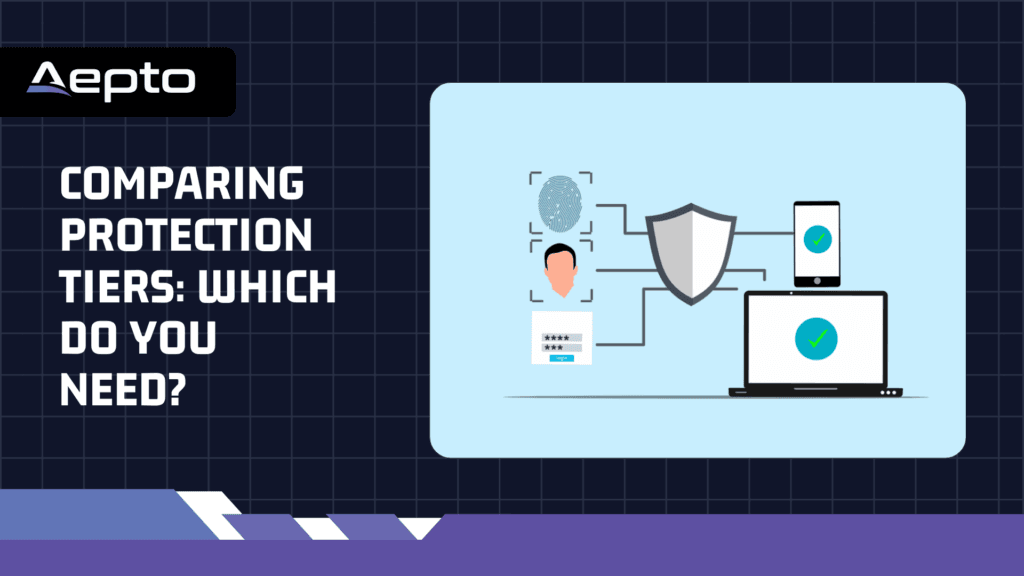
Not every domain requires the same level of security. Here is how to decide:
| Feature | Personal Blog | Small Business | Enterprise / E-commerce |
| WHOIS Privacy | Mandatory | Mandatory | Mandatory |
| Registrar Lock | Mandatory | Mandatory | Mandatory |
| Registry Lock | Optional | Recommended | Mandatory |
| 2FA/MFA | Mandatory | Mandatory | Mandatory |
| Smart Domain Monitoring | Optional | Recommended | Mandatory |
| Dedicated Account Manager | No | No | Yes |
Strategic Implementation: How to Protect Your Domain
If you’ve decided that protection is worth the investment, here is the roadmap to implementing it effectively.
Step 1: Consolidate Your Portfolio
Many businesses have domains spread across five different registrars. This fragmentation is a security risk. Use one-click domain management tools to bring everything under one secure roof.
Step 2: Enable Registry-Level Locks
For your “crown jewel” domains (your primary brand names), contact your registrar to see if they offer registry-level locking. This ensures that no changes can be made without a verified phone call or a notarized document.
Step 3: Implement Multi-User Access Controls
Never share a single login for your domain registrar. Use a platform that allows you to grant “view-only” access to developers while keeping the “administrative” permissions restricted to the business owner.
Step 4: Audit Your DNS Regularly
DNS records are the “routing instructions” for your domain. Regularly auditing these records, or using smart global uptime monitoring, ensures that no unauthorized subdomains have been created for phishing.
Common Myths About Domain Protection
To truly understand the value, we must debunk some common misconceptions.
Myth 1: “I’m too small to be targeted.”
Hackers often prefer small businesses because they have weaker security protocols. They use small domains to host malware or as stepping stones for larger attacks.
Myth 2: “My registrar’s default security is enough.”
Standard registrar security is designed for convenience, not high-level protection. Default settings are often the most vulnerable.
Myth 3: “If my domain is stolen, I can just get it back.”
While possible, the recovery process is not guaranteed and can take months. In the meantime, your business is effectively paralyzed.
Conclusion: The Verdict
So, is domain protection worth it?
The answer is a resounding yes. In an era where digital assets are the primary drivers of business value, leaving your domain unprotected is akin to leaving the vault of a bank wide open. The costs associated with domain protection are a fraction of a percent of most marketing budgets, yet the protection it provides secures the entirety of your digital investment.
By moving toward AI-powered smart domain insights and robust theft guarding, you aren’t just buying security; you are buying the future of your brand.
Frequently Asked Questions (FAQs)
What is the difference between WHOIS privacy and domain protection?
WHOIS privacy specifically hides your personal contact information from the public database. Domain protection is a broader term that includes WHOIS privacy plus features like transfer locks, monitoring, and hijacking prevention.
Can a domain be stolen if I have 2FA enabled?
Yes. While 2FA makes it much harder, attackers can use session hijacking, SIM swapping, or social engineering against the registrar’s support team to bypass 2FA. This is why multi-layered protection is necessary.
Does domain protection affect site speed?
No. Domain protection happens at the registrar and registry level. It has zero impact on the loading speed of your website or your server performance.
Is domain protection a one-time fee?
No, it is typically an annual subscription that runs alongside your domain registration. However, compared to the potential loss of revenue, the cost is marginal.
What should I do if I think my domain has been hijacked?
Immediately contact your registrar’s “abuse” or “security” department. Change your email passwords and check your DNS records for unauthorized changes. If you have a protection service like Aepto, trigger a security freeze immediately.
Read more:
- Safeguarding Your Online Presence: Ultimate Guide to Domain Squatting Protection Platforms
- Revolutionizing Cybersecurity: The Power of AI Threat Detection
- What Is Domain Name Portfolio Management: Securing, Auditing, and Scaling Digital Real Estate
- What is Uptime Monitoring: Continuous Availability, Latency Auditing, and Incident Management
- How to Protect Your Domain Name from Cybersquatting: The AI-Powered Enterprise Blueprint